UNESCO World Heritage · North Wales · Medieval Walled Town
Conwy, Wales
Eight centuries of history on the estuary — castle, walls, quayside and mountains all within walking distance
UNESCO World Heritage · North Wales · Medieval Walled Town
Eight centuries of history on the estuary — castle, walls, quayside and mountains all within walking distance

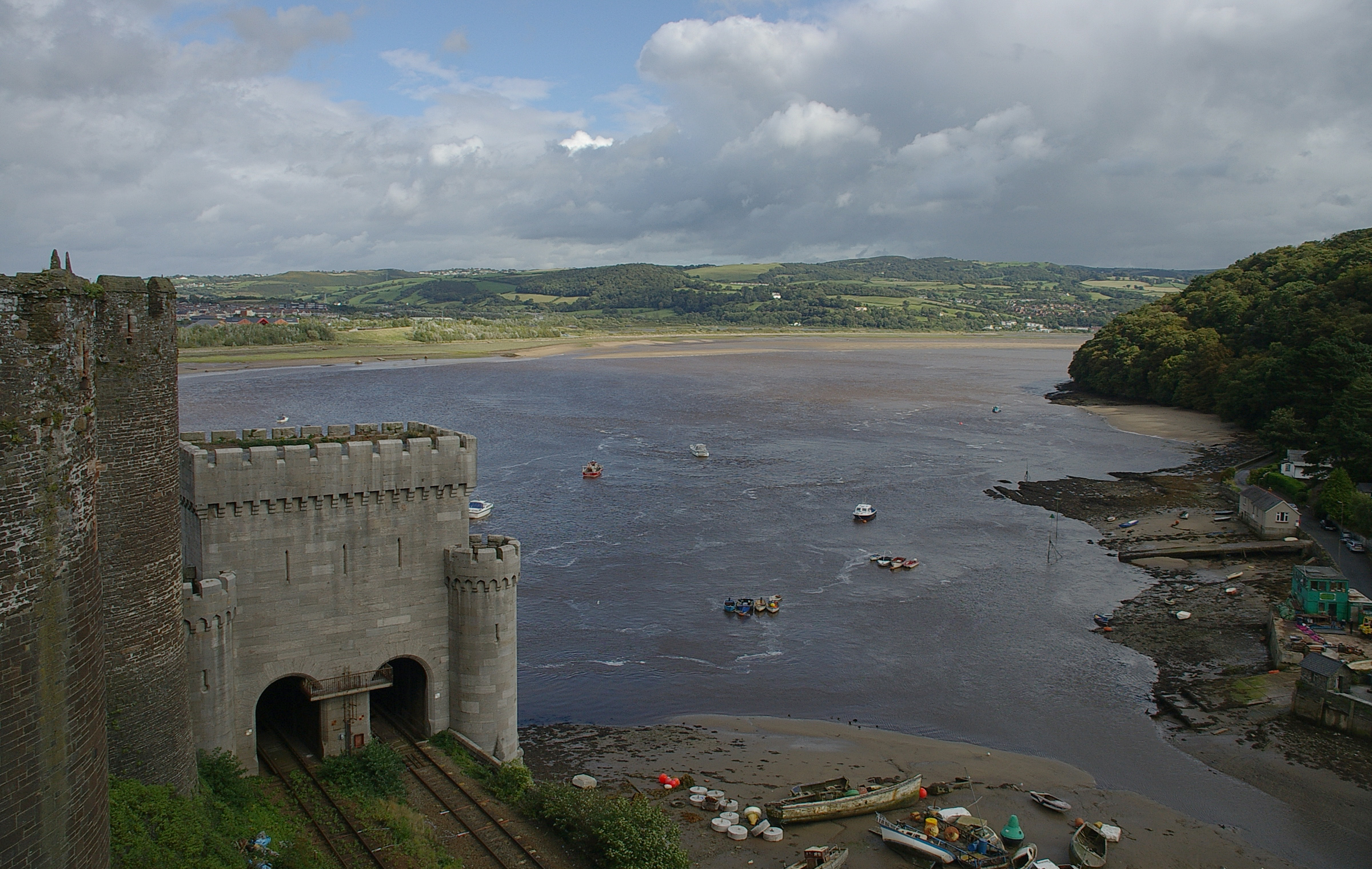
Edward I’s masterpiece — one of the finest medieval fortresses in Europe, built in just four years from 1283.
Conwy Castle →
1.3km of near-complete medieval walls with 21 towers — walk the full circuit above rooftops and estuary.
Town Walls →
Fishing boats, mussel sheds and waterfront cafes — the working harbour is the beating heart of the town.
Conwy Quay →
The finest Elizabethan town house in Wales — remarkably complete and managed by Cadw within the walled town.
Plas Mawr →
An Iron Age hillfort summit minutes from the castle, with panoramic views across the estuary and Carneddau.
Mountain Walk →
A nature reserve on the estuary with hides overlooking waders, egrets and wildfowl — a calmer side of Conwy.
RSPB Reserve →Few towns in Britain can match Conwy for sheer medieval drama. Squeezed between the estuary and the hills of the Carneddau, this compact walled town in North Wales packs an extraordinary concentration of history, architecture and natural beauty into a remarkably small area. The castle that dominates the skyline is one of the finest surviving examples of medieval military architecture anywhere in Europe, and together with the near-complete circuit of town walls it forms part of a UNESCO World Heritage Site shared with Beaumaris, Caernarfon and Harlech.
Yet Conwy is far more than a heritage showpiece. The working harbour still hosts fishing boats, and the famous Conwy mussels — harvested sustainably from the estuary for over 700 years — appear on menus right across North Wales. The quayside is lined with independent cafes, pubs and restaurants, and the streets within the walls are full of independent shops, galleries and historic buildings that reward slow exploration.
Conwy Castle is the unmissable starting point. Built between 1283 and 1289 at Edward I’s command, it was constructed with extraordinary speed — a workforce of up to 1,500 men completed it in under four years. Eight massive round towers and two barbicans protect the inner and outer wards, and the views from the battlements across the estuary to the Carneddau are reward enough for the climb. It is managed by Cadw and requires a ticket; allow two hours.
The town walls are a revelation. At 1.3km long with 21 towers, they form one of the best-preserved medieval town circuits in Europe, and large sections can be walked for free. The stretch along the quay side and up to the castle is the most dramatic; the upper sections give elevated views over rooftops to the estuary and mountains beyond.
Plas Mawr, the Elizabethan merchant’s house built by Robert Wynn between 1576 and 1585, is one of the great surprises of Conwy. Its elaborate plasterwork, period furniture and compact warren of rooms bring the Tudor town to life far more vividly than the castle does. It is managed by Cadw and sits a short walk from the castle on the High Street.
The Quay and Britain’s Smallest House — a fisherman’s cottage measuring just 1.8m wide, still standing against the town walls — complete the must-see list. The quay is the place to linger over a coffee and watch the estuary change with the tide.
Search hotels, B&Bs, guesthouses and self-catering in Conwy and the surrounding area — powered by Booking.com.
Search Accommodation on Booking.com →Powered by Booking.com — our affiliate partner
Conwy sits at the edge of outstanding walking and cycling country. Conwy Mountain rises immediately west of town and is accessible on foot within minutes of the castle car park — the summit carries an Iron Age hillfort and rewards the modest climb with views stretching to Anglesey and the Llyn Peninsula. Sychnant Pass to the west is a dramatic mountain defile popular with cyclists, and the Conwy Valley stretches south toward Snowdonia through some of the finest riverside scenery in North Wales.
RSPB Conwy, a nature reserve on the estuary just outside town, provides a calmer outdoor option with hides overlooking the water throughout the year. The reserve has a cafe and is suitable for all the family.
Conwy’s food scene punches well above its weight for a town of its size. The quayside and the streets within the walls have a strong concentration of independent restaurants, cafes and pubs, with local seafood — especially the famous Conwy mussels — featuring prominently on many menus. See our guides to the best restaurants, cafes and pubs in Conwy for detailed recommendations.
Accommodation ranges from characterful guest houses and B&Bs within and just outside the walls to hotels on the waterfront. Staying inside the walls gives you the chance to see the castle floodlit after the day-trippers have gone.
Conwy town sits within Conwy County Borough, a local authority created in 1996 from the former districts of Aberconwy and Colwyn. The county stretches from the Irish Sea coast — taking in the resorts of Llandudno, Colwyn Bay and Abergele — south through the Conwy Valley into the uplands of Snowdonia and east across Mynydd Hiraethog, the broad heather moorland sometimes called the Denbigh Moors. It covers roughly 1,130 square kilometres and is home to around 116,000 people, making it one of the larger but more sparsely populated counties in Wales outside the south.
The River Conwy is the defining geographical feature of the region. Rising in Llyn Conwy high on the Migneint blanket bog and flowing north for over 45 kilometres to the sea, it has shaped the landscape, the economy and the history of the area for millennia. The valley it carves — broad and fertile in its lower reaches around Llanrwst, steep and wooded further south — was for centuries one of the main routes from the coast into the heart of Snowdonia. The estuary where the river meets the sea is wide, tidal and ecologically rich, forming the backdrop to the town and providing its famous mussel beds.
The land that is now Conwy County was historically part of the kingdom of Gwynedd, the most powerful of the early Welsh kingdoms. It was here that the princes of Gwynedd held court in the centuries before the Edwardian conquest, and place names throughout the area preserve traces of that Welsh-speaking, pastoral culture. The conquest of 1282–83, which followed the death of Llywelyn ap Gruffudd — the last native Prince of Wales — transformed the region irrevocably. Edward I’s programme of castle building at Conwy, Caernarfon, Harlech and Beaumaris was as much a political project as a military one: these fortresses anchored English rule in a landscape that had resisted it for centuries.
In the centuries after the conquest the town of Conwy declined in relative importance as trade shifted to other ports, but the valley remained a productive agricultural and later slate-quarrying hinterland. The Victorian railway — Robert Stephenson’s tubular rail bridge across the estuary, completed in 1848 alongside Telford’s earlier suspension bridge — opened the area to tourism and transformed Llandudno from a small fishing village into one of the grandest seaside resorts in Britain. Today the county balances a year-round population engaged in farming, tourism and light industry with visitors drawn to its combination of medieval heritage, mountain landscape and coast.

From the coast at Llandudno and Colwyn Bay to the Conwy Valley and the Carneddau uplands — the wider county explored.
Explore the county →
From the founding of Aberconwy Abbey in the 12th century to the Edwardian conquest, the Victorian railway and beyond.
Read the history →Gigs, guided walks, workshops, markets and family days in and around Conwy, updated daily by our sister site North Wales Events.
See all Conwy events → Conwy’s annual events →
Listings from North Wales Events. Please check times with the organiser before travelling.
Llandudno is four miles away — a grand Victorian resort with two beaches, a pier and the Great Orme headland. Bodnant Garden, eight miles south, is one of Britain’s finest National Trust gardens and at its best in spring and early summer. Betws-y-Coed and the Snowdonia gateway are 20 miles south with waterfalls, forest walks and mountain access. See our full day trips guide for more.
Conwy has its own train station on the Chester–Holyhead line, and the A55 expressway passes through the Conwy Tunnel beneath the estuary. Start planning with our Conwy town map, weekend itinerary or one-day guide, and if you are coming in winter, see Christmas in Conwy.
 Day trips